


 English
 Français
 عربى

Industry News


What Must Match Before Ordering a DPN Miniature Circuit Breaker?
2026-11-20
A distribution-board order can contain the correct product family and still contain the wrong breaker variant. Current rating, tripping characteristic, terminal arrangement and the approved installation all matter. A purchase description that stops at “DPN miniature circuit breaker” leaves several decisions open, particularly when samples, catalogue photographs and packing labels show different markings.
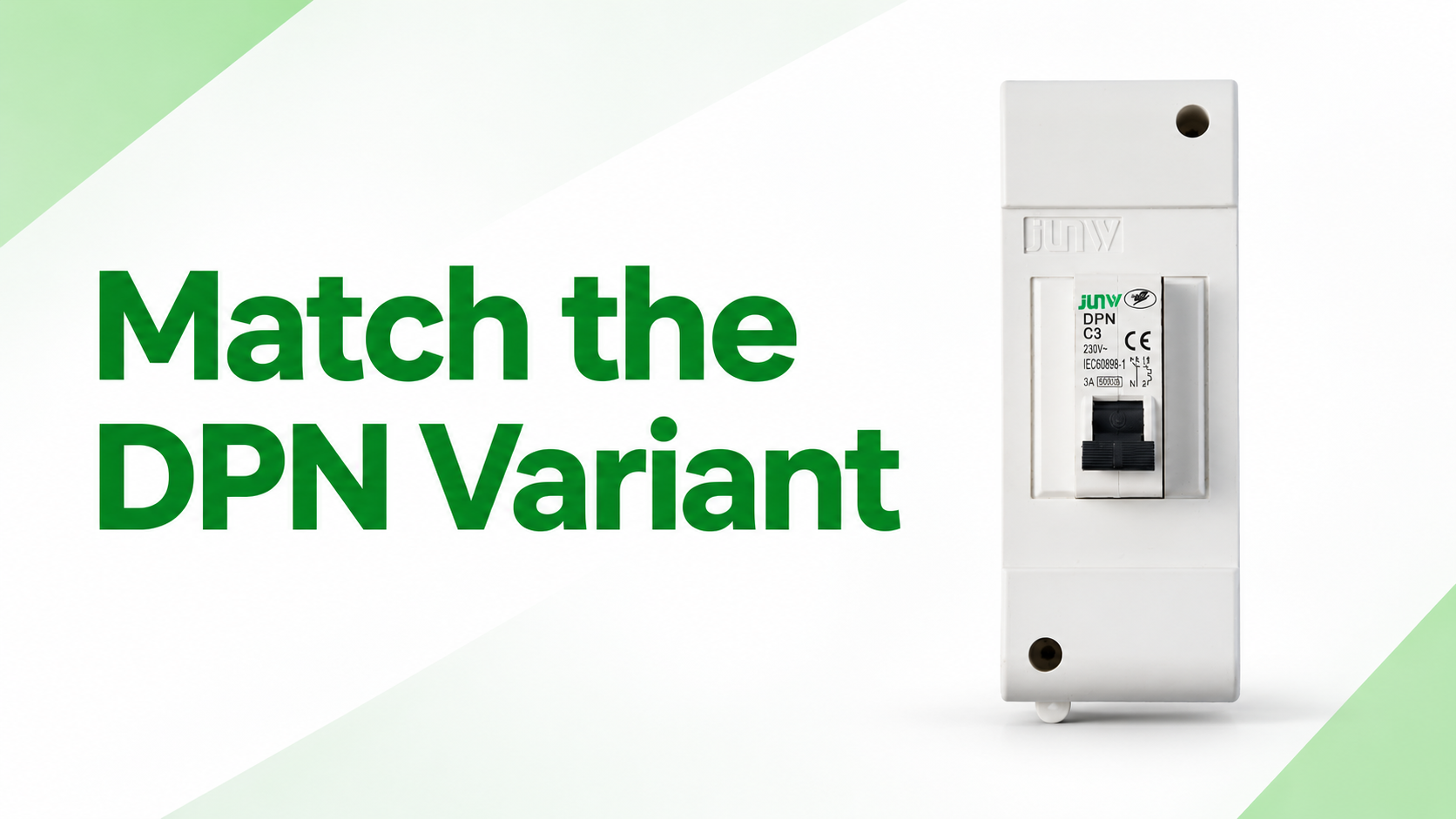
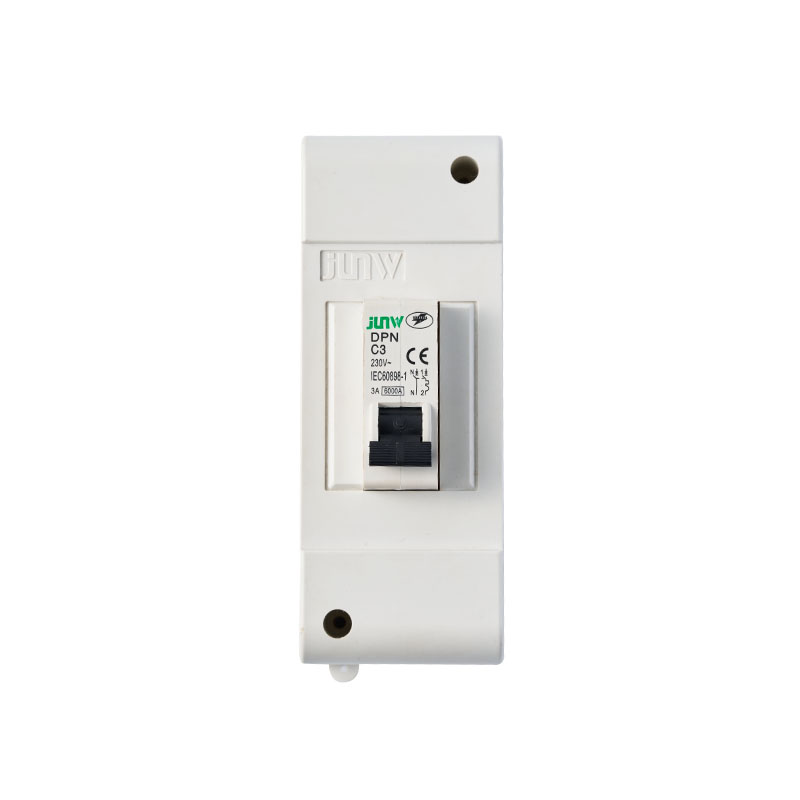
JUNW's EBS1B DPN miniature 1P+N circuit breaker provides a useful starting point for reviewing those decisions. The listing describes a phase-and-neutral product for residential AC distribution. The purchasing task is to connect that description to an exact variant and an approved board design, with the electrical designer responsible for the application assessment.
Begin with the circuit schedule
The circuit schedule should identify the supply, load, cable and protection requirements for each outgoing circuit. Buyers should obtain that information before asking a supplier to select a current rating from a product photograph. The rating must be coordinated with the circuit and conductors; selecting a larger number simply to reduce nuisance trips can undermine the intended protection arrangement.
Group the schedule into exact order lines. A line should identify the product family, rated current, characteristic, pole arrangement and required supporting documents. Where several circuits use similar-looking devices, give each variant a separate stock code. This makes substitutions visible during quotation review and helps warehouse teams avoid mixing cartons after delivery.
The destination market also matters. A product offered for a particular AC system should not be treated as automatically suitable for another supply arrangement or local installation practice. Confirm the actual voltage and frequency, relevant installation requirements and acceptance documentation before approving a shipment.
Read the pole designation carefully
The designation 1P+N identifies a phase-and-neutral arrangement. It should not be interpreted as a complete description of the internal protective functions or the required connection orientation. Obtain the manufacturer's connection information and confirm how the neutral and phase terminals are identified on the exact device being ordered.
This is especially useful when replacing an existing board component. Similar enclosure size does not establish interchangeable terminal positions, busbar compatibility or protective behavior. The installing designer or qualified electrician should review the connection scheme. Procurement can support that review by supplying clear front, side and terminal photographs rather than requesting approval from a catalogue thumbnail alone.
A compact comparison for quotation review
| Order item | Evidence to compare | Question to resolve |
|---|---|---|
| Rated current | Schedule, quotation and device marking | Does the delivered variant match the approved circuit? |
| Tripping characteristic | Declared characteristic and technical sheet | Has the designer considered the load behavior? |
| Breaking capacity | Variant documentation and site assessment | Is the declared capacity suitable for the installation? |
| Mechanical interface | Dimensions, terminals and board drawing | Will mounting and connection fit without improvisation? |
| Identification | Sample label, carton label and order code | Can receiving staff distinguish every variant? |
Breaking capacity deserves its own review. It concerns interruption of a fault under defined conditions, rather than the normal load current. A purchaser should obtain the declaration for the actual variant and have it checked against the installation's prospective fault conditions. Neither a higher current rating nor a familiar enclosure shape answers that question.
Treat the sample as a controlled reference
A sample is useful when it represents the proposed production supply. Record its order code and photograph the visible markings. If the supplier proposes a different label, rating or construction for the bulk order, request an updated approval rather than assuming the original sample still represents the shipment.
The catalogue image itself should also be read with care. A photo may illustrate one version within a family. Where the photograph and descriptive specification differ, ask for clarification and retain the response with the quotation. Do not combine favorable numbers from different variants into a single purchasing specification.
For a board builder, fit checks should include access to terminals, enclosure clearances and the connection method specified for the assembly. The intended mounting arrangement should be supported by the relevant drawing. A successful loose-device inspection is only one part of confirming compatibility with the completed distribution board.
Release the order with a short evidence pack
- Attach the approved circuit schedule and exact variant list.
- Record the manufacturer part description and all required ratings.
- Retain the applicable connection and dimensional information.
- Identify documents required for the destination and installation.
- Define sample approval, label checks and substitution controls.
- Agree how a discrepancy will be reported before goods are accepted.
Receiving inspection can then compare the order, cartons and devices against the same record. Check that quantities are separated by variant and that markings remain legible. Document damaged enclosures, missing identification or unexplained differences. Electrical performance verification belongs within the agreed technical inspection process and should be carried out using appropriate procedures and qualified personnel.
The result is a more precise enquiry for JUNW and a clearer release decision for the buyer. Instead of approving a generic DPN family name, the team approves a defined device variant for a defined application. That discipline reduces ambiguity between the circuit design, supplier quotation and products arriving at the warehouse.
For repeat orders, use the previous approval as a reference and still compare the current offer. Catalogue descriptions, labels and available variants can change. Ask the supplier to identify any proposed differences before production release. The buyer can then route the change to the board designer instead of treating it as a routine commercial substitution. Keep the accepted revision with the receiving instructions so the warehouse and technical team work from the same information when checking the next shipment.

CONTACT
 Unit 2, Building 18, Phase II, Dongtou Emergency Industrial Park, Wenzhou, Zhejiang Province, China
 +86-13587789751
 junwei@jvele.com
KEEP IN TOUCH
Copyright © Zhejiang Junwei Electric Co., Ltd. All Rights Reserved
Record number:浙ICP备09058387号
Junwei Electric Component Manufacturer
