


 English
  Français
  عربى
عربى 
Industry News


What Is the Difference between an AC MCB Breaker and a DC MCB Breaker
2026-09-04
Electrical circuits do not all work in the same way. One important difference comes from the type of current used by a system. Alternating current changes direction during normal operation, while direct current keeps moving in one direction. Such a difference affects how electrical protection needs to respond when an abnormal condition occurs.
An AC MCB Breaker is designed for circuits using alternating current, while an MCB For DC Circuits is intended for direct current applications. Both devices have a similar basic purpose: they can disconnect a circuit when an overload or short circuit creates an unsafe condition. Their internal construction and interruption characteristics, however, need to match the type of current involved.
During normal use, a circuit may appear to work properly with either type of breaker. Problems can arise when a protective device is selected without considering the current type. Disconnecting a fault is not simply a matter of opening a pair of contacts. Electrical energy can continue across the opening for a short period, so the breaker needs to handle that process according to the circuit it protects.
For that reason, AC and DC should be treated as separate selection conditions. Circuit voltage, current, load characteristics, wiring arrangement, and the intended protection device all need to be considered together rather than relying on the physical appearance of a breaker.
How Does an AC MCB Breaker Work
An AC MCB Breaker monitors current flowing through an alternating‑current circuit. During ordinary operation, current remains within the expected working range and the circuit stays connected. When excessive current continues for a period of time, the breaker can trip and interrupt the supply.
A short circuit creates a different situation. Current can rise very quickly, causing the protective mechanism to disconnect the circuit. The purpose is not to control the equipment itself, but to stop abnormal current from continuing through the wiring and connected components.
One important part of AC breaker operation is the way current changes direction during its normal cycle. When contacts separate during a fault, the electrical arc formed between them can be affected by the changing nature of AC current. At certain points in the cycle, current naturally passes through a low‑current state, which assists the interruption process.
Internal components are arranged to work with that operating condition. Contact design, movement, insulation, and arc control all contribute to the breaker's ability to disconnect the circuit.
For everyday applications, an AC MCB Breaker may be found in areas such as:
- Building distribution circuits
- Lighting circuits
- General AC‑powered equipment
- Small electrical distribution arrangements
Suitability still depends on the actual circuit. A breaker should not be selected only because its current rating appears suitable. The current type and intended application need to agree with the protection device.
How Does an MCB For DC Circuits Work
An MCB For DC Circuits performs a similar protective role, although the current behaves differently. Direct current normally travels in one direction rather than repeatedly changing direction. Once an arc forms as the breaker contacts separate, there is no natural current reversal to assist interruption in the same way as AC.
As a result, the breaker needs a design suitable for maintaining control over the arc during disconnection. Internal contact spacing and arc‑handling arrangements are important parts of that design. Simply placing an ordinary AC breaker into a DC circuit does not automatically provide the same protection.
DC applications can appear in different forms. Battery systems, control circuits, equipment powered by direct current, and certain energy‑related systems may require DC circuit protection. Each application still needs a suitable protective device based on its electrical conditions.
Polarity can also matter for some DC protection devices. A product may have a specified connection direction, so installation needs to follow the manufacturer's instructions and the requirements of the particular circuit.
Another point worth noting is that a breaker made for DC does not become suitable for every DC application. Different circuits can have different operating conditions, loads, and interruption requirements. Checking the product's stated application is therefore an important part of selection.
What Is the Main Difference Between AC and DC MCBs
At a basic level, both types of MCB protect electrical circuits from abnormal current. Their key difference lies in how they handle the current during interruption.
AC protection is designed around alternating current, whose direction changes during operation. DC protection is designed around current that continues in one direction. Because the interruption process differs, internal construction can also differ.
A breaker may look almost identical to another model from the outside, yet appearance does not show whether it is intended for AC or DC use. Markings, technical information, circuit application, and connection requirements provide more useful information.
Selecting between the two therefore starts with a simple question: Is the circuit AC or DC? Once that point is clear, other conditions can be checked in relation to the selected breaker rather than treating both types as interchangeable.
For equipment buyers, installers, and maintenance teams, keeping the distinction clear can prevent an unsuitable protection device from being matched with a circuit simply because the physical size or general appearance seems familiar.
Where Are AC and DC MCBs Commonly Used
AC and DC circuits appear in different parts of electrical systems, so the related protective devices also have different application areas. An AC MCB Breaker is commonly associated with building power distribution, lighting, household equipment, and other equipment that runs from alternating current.
An MCB For DC Circuits is more closely related to systems that use direct current. Battery‑powered equipment, control circuits, communication equipment, and some energy storage arrangements may require DC protection. The exact application depends on how the circuit is designed and what kind of load is connected.
Choosing a breaker according to the application helps keep protection consistent with the electrical system. A device that works well in an AC distribution circuit should not automatically be moved into a DC application simply because the rated current appears similar.
Circuit conditions can also change during actual operation. Some equipment has a steady load, while other loads may create different current behavior when starting or changing operating states. Such conditions need to be considered together with the intended breaker.
A simple comparison can help separate the two types:
| Application Point | AC MCB Breaker | MCB For DC Circuits |
|---|---|---|
| Typical Circuit | AC power circuits | DC power circuits |
| Common Areas | Building power and lighting | Battery and DC equipment |
| Current Behavior | Direction changes during operation | Flows mainly in one direction |
| Main Selection Concern | AC circuit conditions | DC circuit conditions |
| Installation Check | Wiring and circuit requirements | Wiring, polarity, and circuit requirements |
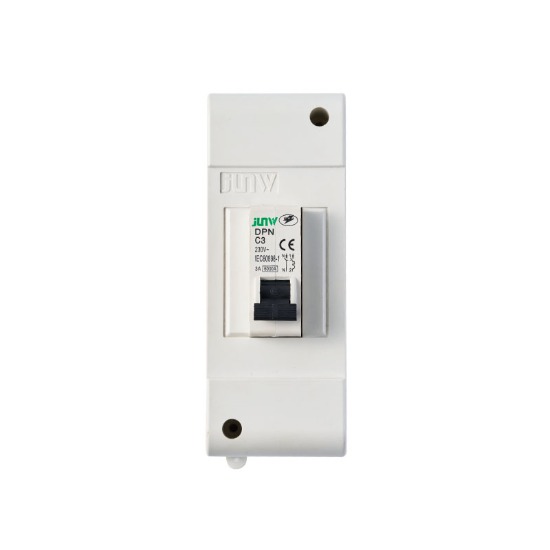
Can an AC MCB Breaker Be Used for a DC Circuit
An AC MCB Breaker should not be assumed to work safely in a DC circuit simply because both devices have a similar shape or current marking. Circuit interruption is affected by the way current behaves, especially when contacts separate during a fault.
With AC, current changes direction during normal operation. DC keeps flowing in one direction, so an arc between separated contacts may behave differently. A breaker designed specifically for DC can include internal arrangements intended to deal with that condition.
Some protective devices may be designed for both AC and DC applications. Such use depends on the manufacturer's stated specifications rather than appearance alone. Product markings and technical documents should therefore be checked before selecting a device for a different current type.
A useful approach is to check:
- The current type stated for the breaker
- The intended circuit application
- The electrical conditions of the system
- Any required connection direction
- The installation instructions supplied with the product
Changing a protection device without checking the circuit design can create unnecessary risk. Electrical installation and maintenance should follow applicable safety requirements and, where appropriate, be handled by qualified personnel.
What Should Be Checked Before Choosing an MCB
Choosing an MCB involves more than matching a current value. The protective device needs to suit the complete circuit, including the power type, electrical conditions, load, wiring arrangement, and installation environment.
Start by identifying whether the circuit uses AC or DC. Once the current type is clear, check the product information for its intended use. An AC MCB Breaker should correspond with an AC circuit, while an MCB For DC Circuits should be selected according to the requirements of the DC system.
Several points deserve attention during the selection process:
- Circuit type Confirm whether the power source provides AC or DC. Mixing the two during selection can create an unsuitable match.
- Electrical conditions Check the system requirements stated in the equipment documentation. A breaker needs to be appropriate for the circuit in which it will operate.
- Load characteristics Different loads can place different demands on a protective device. Motors, electronic equipment, lighting, and battery‑powered systems may not behave in the same way during operation.
- Pole arrangement and wiring The number of poles and connection arrangement should correspond with the circuit design. DC applications may also have specific connection or polarity requirements.
- Installation environment Temperature, moisture, dust, enclosure conditions, and available space can affect the suitability of electrical equipment. Product instructions should be considered alongside the actual installation location.
Taking several conditions into account gives a clearer basis for selection than relying on one number printed on the device.
What Installation Details Affect MCB Protection
Correct installation helps a protective device perform according to its intended design. Even a suitable breaker can become problematic when connections are loose, wiring is incorrect, or the device is used outside its stated conditions.
Connection points should be secure and arranged according to the product instructions. For some DC breakers, polarity or connection direction may need particular attention. Such requirements should not be guessed from the shape of the terminals.
The breaker should also be installed in a suitable enclosure or distribution arrangement where required. Surrounding conditions need to remain within the range stated by the manufacturer, especially where heat, moisture, or dust may be present.
Before a circuit is placed into service, relevant connections and protective arrangements should be checked. Any inspection or modification involving energized electrical equipment should follow applicable safety procedures and be carried out by suitably qualified personnel where required.
Good installation practice is therefore part of protection rather than a separate concern. A correct product cannot compensate for unsuitable wiring or careless installation.
How Can AC and DC MCB Selection Be Made Clearly
The difference between AC and DC MCBs becomes easier to manage when selection follows the actual circuit instead of the appearance of the breaker. Both devices are intended to provide circuit protection, yet their interruption requirements are not identical.
A practical selection process can follow five basic steps:
- Identify the power type Determine whether the circuit operates with AC or DC.
- Check the circuit conditions Consider the system requirements, connected load, wiring arrangement, and installation environment.
- Match the protective device Select a breaker whose stated application corresponds with the circuit.
- Confirm connection requirements Check markings, terminal arrangements, polarity requirements, and installation instructions.
- Review before use Make sure the selected device and installation arrangement agree with applicable electrical safety requirements.
Such a process keeps the decision focused on how the circuit actually operates. An AC MCB Breaker and an MCB For DC Circuits may serve a similar protective purpose, yet their suitable applications are not automatically interchangeable.
For buyers and installation teams, the key point is simple: start with the type of current, then consider the complete circuit. A clear match between the power system and its protective device helps create a more consistent approach to electrical protection.
CONTACT
 Unit 2, Building 18, Phase II, Dongtou Emergency Industrial Park, Wenzhou, Zhejiang Province, China
 +86-13587789751
 junwei@jvele.com
KEEP IN TOUCH
Copyright © Zhejiang Junwei Electric Co., Ltd. All Rights Reserved
Record number:浙ICP备09058387号
Junwei Electric Component Manufacturer
