


 English
 Français
 عربى

Home / News / Industry News / Cylindrical Fuse Orders: Separate Physical Size from Electrical Selection
Industry News


Cylindrical Fuse Orders: Separate Physical Size from Electrical Selection
2026-11-27
A cylindrical fuse can fit neatly into a holder while remaining unsuitable for the circuit. Physical dimensions answer only one question: whether the component can occupy the available space. Electrical selection requires a separate assessment of the circuit and the protective function. For replacement purchasing, that distinction prevents a familiar-looking cartridge from becoming an uncontrolled substitution.
The product photograph starts a conversation
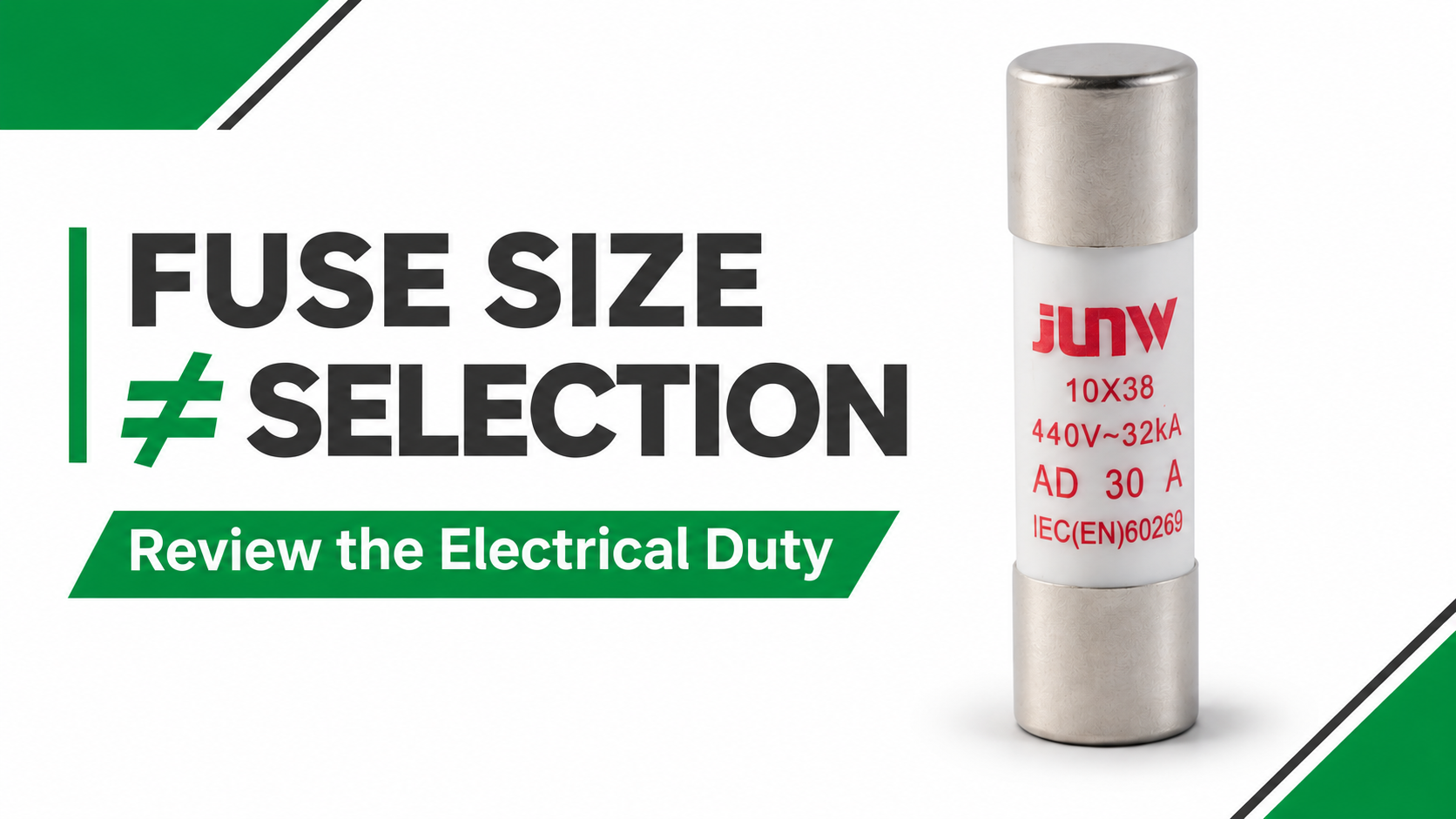
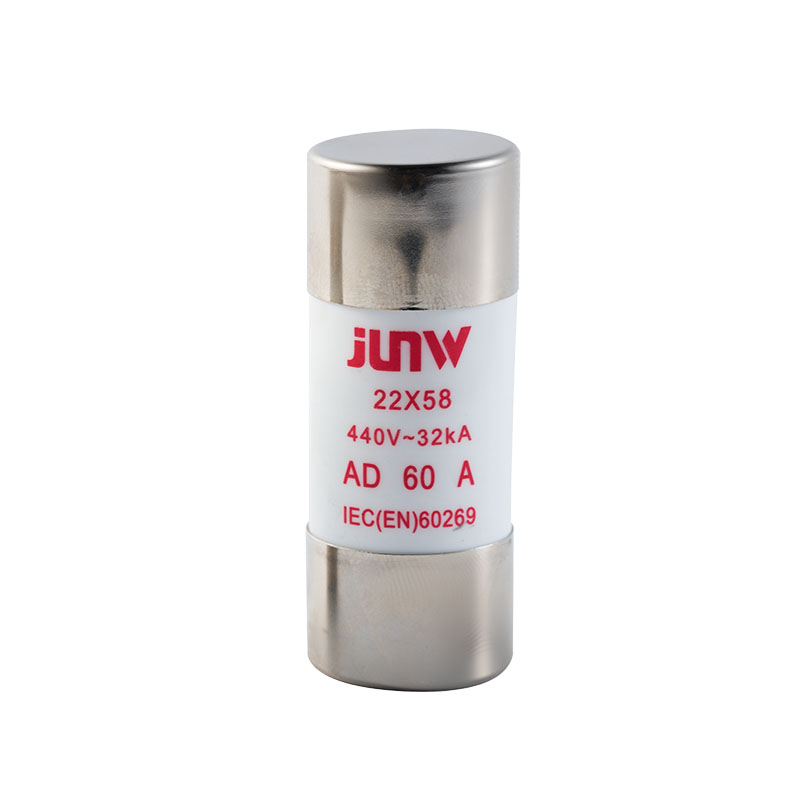
JUNW lists a 10×38 cylindrical ceramic fuse family. The photographed item has a ceramic body, metal end caps and printed identification. Those visible details are useful for identification, but they are not a complete selection document. Obtain the exact order code and its current technical sheet before approving a purchase.
A product family may include different current ratings or configurations. Keep the requested variant explicit on the order. If a photograph, description and proposed quotation do not agree, resolve the difference with the supplier rather than choosing whichever value is most convenient. A sample image should never silently override the approved circuit specification.
Begin with the protected circuit
The responsible electrical designer should define the circuit voltage, load characteristics, expected fault conditions and protection requirements. Starting current, overload behavior and the required coordination with other devices can affect selection. Procurement should obtain that approved selection rather than treating the load current as the only number needed.
Do not interpret a current marking as a universal promise that the fuse will protect every load carrying that current. Protective performance relates to the fuse characteristics and the application. Request the applicable time-current information and the documentation needed for the project. The selection review belongs to qualified electrical personnel.
Keep five checks separate
| Check | What it establishes | Evidence to obtain |
|---|---|---|
| Dimensions | Physical cartridge and holder fit | Exact dimensional drawing |
| Rated voltage | Suitability for the circuit voltage and type | Variant technical data |
| Rated current | Selected protective device rating | Approved electrical schedule |
| Breaking capacity | Ability to interrupt the specified prospective fault | Applicable rating documentation |
| Operating characteristic | Relationship to the protected circuit | Characteristic curves and design review |
These checks are related but not interchangeable. A dimensionally correct part does not demonstrate adequate interrupting capability. An appropriate current rating does not establish coordination. Record the accepted values together, using the exact product identification, so that an equivalent-looking cartridge cannot enter the supply chain without review.
The holder is part of the application
Review the holder model, terminal arrangement and applicable operating conditions alongside the fuse. Confirm that the supplier supports the proposed combination. The holder has its own ratings and installation requirements; it should not disappear from the review simply because a cartridge slides into place.
Panel conditions can also matter. Ambient temperature, neighboring heat sources and enclosure arrangement should be considered by the designer using the manufacturers’ instructions. If the installation differs from the conditions supporting the ratings, ask what additional assessment is required. Do not create a derating factor from a generic product photograph.
What should an incoming inspector compare?
An incoming check can verify identity and condition without attempting to repeat the electrical design. Compare the supplied order code, visible markings, dimensions, quantity and accompanying documents with the approved purchase specification. Inspect for physical damage or packaging problems and keep uncertain items segregated until clarified.
- Use the exact variant identification from the approved order.
- Confirm that current and voltage markings match the required item.
- Check the documented holder combination.
- Retain required certificates or test information with the batch record.
- Escalate conflicting labels or missing identification before issue.
Photographs of the supplied marking can support a receiving record. They should be readable and associated with the actual lot, rather than copied from a catalog. This is particularly useful where several physically similar fuse variants are held in the same store.
Replacement is an engineering-controlled decision
A failed fuse can indicate an underlying circuit condition. Replacement should follow the site’s isolation, diagnosis and maintenance procedure. Do not repeatedly replace a device or increase its rating to suppress an unexplained interruption. The reason for operation and the suitability of the replacement belong in the electrical maintenance review.
If an original code is unavailable, provide the existing device information, holder details and application requirements to the responsible engineer and supplier. An alternative should be assessed against the required characteristics and documented as an approved change. Similar size, color or brand familiarity is not sufficient evidence of equivalence.
Distinguish a fuse link from a neutral component
A product family may also mention a neutral component. Identify its intended function separately through the designer and supplier. Do not assume that a neutral item and a protective fuse link are interchangeable because the bodies share a cylindrical format. The purchase record must distinguish the actual component required in each circuit position.
For a panel assembled from several variants, use a position schedule that connects each holder with the approved device code. Label spare stock accordingly. This makes an emergency replacement more controlled: maintenance personnel can retrieve the approved item for the identified position instead of interpreting a shelf full of similar cartridges during an outage. Review any change in circuit duty before continuing to use the old spare specification.
Order the defined configuration
A useful JUNW enquiry includes the approved fuse identification, circuit information needed for review, holder model, quantity and documentation requirements. Where project approval or market-specific requirements apply, identify them precisely and request current evidence covering the exact configuration. Avoid expanding a general website statement into a claim that every variant holds every approval.
The result is a replacement specification that can be checked by design, purchasing and receiving teams. Dimensions remain essential, but they take their proper place beside electrical duty, protective behavior and holder compatibility. That complete record is more valuable than a purchase line reading only “10×38 fuse.”
CONTACT
 Unit 2, Building 18, Phase II, Dongtou Emergency Industrial Park, Wenzhou, Zhejiang Province, China
 +86-13587789751
 junwei@jvele.com
KEEP IN TOUCH
Copyright © Zhejiang Junwei Electric Co., Ltd. All Rights Reserved
Record number:浙ICP备09058387号
Junwei Electric Component Manufacturer
