


 English
  Français
  عربى
عربى 
Industry News


Insulation Piercing Connectors: Match the Main and Tap Conductors
2026-10-16
An insulation piercing connector may appear to offer a simple way to join a branch cable to a main conductor. Procurement still needs to establish whether both cable interfaces match the selected device. A broad conductor range in a quotation is not enough if it does not identify which range applies to the main cable and which applies to the tap.
For distributors and electrical project buyers, IPC cable compatibility should be documented before ordering. The connector, cables and approved installation instructions form one application. This article addresses specification and document review; electrical design and installation remain tasks for appropriately qualified personnel following the applicable requirements.
Record the main and branch as separate interfaces
When comparing insulation piercing connectors, create separate entries for the main conductor and the branch conductor. Record material, cross sectional area, construction and insulation information for each. A cable's nominal area does not describe every property relevant to contact formation.
Main and tap conductor ranges can differ within the same connector model. Read the two entries independently rather than combining them into one broad range on the purchase sheet. If the quotation uses “cable size” without identifying the interface, resolve that ambiguity before approving the product code.
Provide the actual cable manufacturer references where available. This gives the technical reviewer a defined construction to assess. An approximate measurement of the outside diameter can be useful supporting information, but it should not replace the cable designation or conductor data.
Confirm conductor material and construction
Copper and aluminium conductors should not be assumed interchangeable in every connector. Check the permitted combinations in the selected product documents. The contact design and application qualification determine compatibility, rather than the colour or general appearance of the connector body.
Also distinguish solid and stranded constructions where relevant to the product scope. A conductor's external dimensions do not establish that it will form the intended contact under the specified clamping conditions. Keep any manufacturer restrictions in the procurement record.
Include insulation in the compatibility review
The connector must work with the complete insulated cable construction. Record the insulation type and thickness information required by the manufacturer. Do not infer compatibility solely because a cable fits between the connector halves before installation.
Ask the technical team to review any cable variant with different insulation or a revised outside diameter. This is especially relevant when the project allows multiple cable suppliers. A purchasing substitution can alter the interface even if the conductor area remains unchanged.
Keep the accepted cable list with the connector specification. If only one construction has been assessed, state that scope. A general phrase such as suitable for aerial cable should not be used to conceal unresolved differences between the cables on the project.
Read the torque control feature correctly
Some IPC models use a shear head feature to control the installation tightening process. The feature belongs to the specific connector design and its instructions. It does not authorize a purchaser to assign a universal torque or to reuse an installation method from another product.
Record the required tool and procedure from the approved model documentation. If the buyer needs these details in a kit, specify the instruction language and document revision. Avoid writing an abbreviated installation sequence on the carton that omits conditions from the full guide.
A broken shear head is not a substitute for all acceptance checks. The installation team still needs the correct cable, connector position and procedure. Product identification and traceability help establish whether the intended components were actually used.
Separate electrical ratings from physical fit
A connector may physically accommodate a cable while remaining unsuitable for the electrical duty. The technical specification should identify the system voltage, current requirement and other application conditions needed by the designer. The cable range alone does not establish the complete electrical rating.
Review the product's stated test and qualification evidence for the intended market and application. Request the document identifying the exact model and scope. A standards reference in a general brochure should not automatically be applied to every item within the supplier's range.
Do not transfer a stated rating from an external technical example to the ordered product. The buyer's acceptance file should contain evidence for the selected Junwei model or other actual item being purchased, with any limitations retained.
Specify sealing and accessories as part of the set
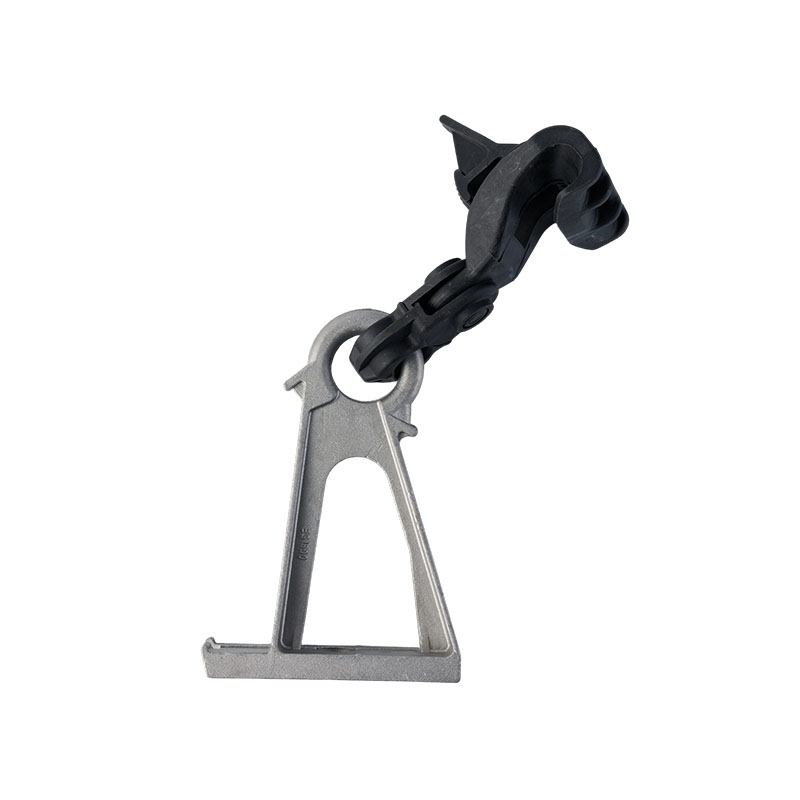
Where the application requires an end cap or other sealing accessory, identify it explicitly in the bill of materials. A product photograph can show an accessory without establishing that it is included in every supplied package.
Review the manufacturer's outdoor application conditions and any restrictions on reuse. Some connector designs are intended for a single installation; do not assume that dismantling and reinstalling will preserve the original contact or sealing performance. The actual model instructions govern the decision.
For distributor kits, keep the connector and matching accessories together under a clear code. This makes receiving inspection and subsequent installation support more reliable than packing several visually similar caps or connector sizes under a generic description.
Maintain a cable and connector approval record
The purchasing record should connect the connector code, main cable, branch cable, product documents and accepted accessories. Add the intended system application and the technical review reference so the buyer can understand why that combination was selected.
When a cable or connector changes, return the interface to technical review before treating the new item as an equivalent substitute. Similar appearance and overlapping area ranges are useful starting observations, not a complete equivalence decision.
A precise specification reduces ambiguity for the manufacturer, distributor and installer. It keeps the main and branch requirements visible, gives electrical reviewers the necessary evidence, and prevents a convenient catalogue range from becoming an unsupported application promise.
CONTACT
 Unit 2, Building 18, Phase II, Dongtou Emergency Industrial Park, Wenzhou, Zhejiang Province, China
 +86-13587789751
 junwei@jvele.com
KEEP IN TOUCH
Copyright © Zhejiang Junwei Electric Co., Ltd. All Rights Reserved
Record number:浙ICP备09058387号
Junwei Electric Component Manufacturer
